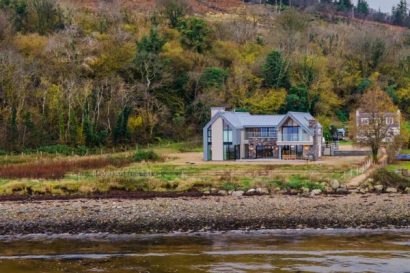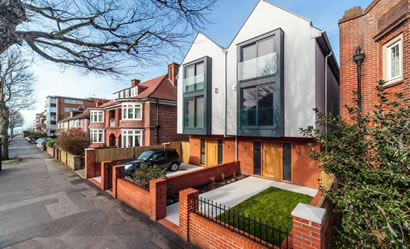
The Developer’s Guide to Structural Insulated Panels (SIPs)

Introduction
The UK residential development sector is facing increasing pressure to deliver new homes quickly, efficiently and sustainably than ever before. Rising material costs, labour shortages, tighter building regulations and increasing environmental expectations are reshaping the way housing developments are designed and constructed.
Traditional masonry construction has served the industry well for decades, but developers are now increasingly exploring Modern Methods of Construction (MMC) to improve build efficiency and reduce project risk.
Structural insulated panels (SIPs) offer a highly effective solution for developers seeking to deliver homes faster while maintaining excellent building performance.
By combining off-site precision manufacturing with rapid on-site installation, SIP construction can significantly reduce build times while improving energy efficiency and construction consistency.
This guide has been developed specifically for property developers, housebuilders and development companies who want to understand how building with structural insulated panels can support projects ranging from single bespoke homes to multi-plot housing developments.
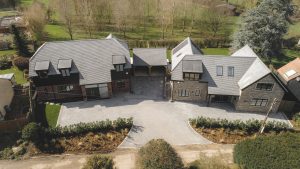
In this guide we explore
- What structural insulated panels are
- How SIP construction works
- Advantages compared with traditional construction methods
- How SIP systems integrate into the development process
- Commercial benefits for developers
- Site logistics and construction programmes
- Long-term energy performance and sustainability
Whether delivering a single plot, housing scheme or larger residential development, SIP construction provides a practical solution to many of the challenges facing modern housebuilding.
What Are Structural Insulated Panels?
Structural insulated panels are high-performance building components designed to form the structural shell of a building.
Each panel is manufactured using three main components:
- Two structural boards, typically OSB (Oriented Strand Board)
- A rigid insulation core, commonly expanded polystyrene (EPS)
- Engineered joints that connect the panels together
When assembled, structural insulated panels create a strong, highly insulated building envelope that replaces traditional cavity wall construction.
Unlike conventional building methods, SIP panels combine structure and insulation within a single component, simplifying the construction process.
Panels are manufactured using precision cutting technology in a controlled factory environment, ensuring each panel is produced to exact specifications before delivery to site.
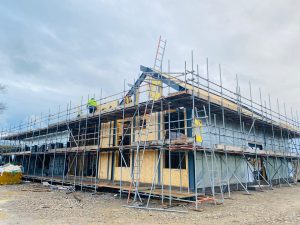
This manufacturing process provides:
- High dimensional accuracy
- Consistent manufacturing quality
- Reduced construction waste
- Faster installation on site
Panels are then assembled on site to form the building’s walls, floors and roof structure.
Why Developers Are Adopting SIP Construction
Developers across the UK are increasingly turning to SIPs as they look to improve build efficiency, reduce development risk and deliver higher-performing homes.
Several factors make this modern method of construction particularly attractive for residential developments.
Faster Construction Programmes
One of the most significant advantages of SIP construction is the speed at which the structural frame can be assembled.
Traditional masonry construction requires multiple trades working sequentially over several weeks and is often impacted by weather delays.
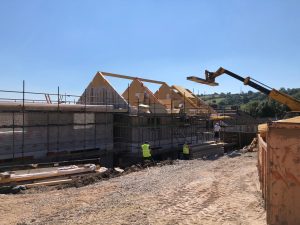
By contrast, SIP panels arrive on site precision-manufactured and ready for installation, allowing the structural shell of a home to be completed in a matter of days.
Typical installation programmes may include:
- External wall panels erected within 1–2 days
- Intermediate floor installation
- Roof panel installation
- Building made weathertight shortly afterwards
A typical SIP house shell can often be completed within 3–7 days, depending on design complexity.
For developers this can lead to:
- Faster plot turnover
- Reduced financing costs
- Earlier property sales
Greater Programme Certainty
Construction delays can significantly affect development profitability.
Weather disruption, labour shortages and material supply issues often impact traditional construction methods.
Because SIP panels are manufactured off-site, much of the build process becomes predictable and controlled.
Factory production ensures panels are manufactured on schedule, while rapid installation reduces weather exposure on site.
For developers managing multi-plot developments, this improved certainty can simplify site management.
Reduced Labour Requirements
Labour shortages continue to impact the UK construction sector.
Traditional masonry construction relies heavily on skilled bricklayers and multiple trades.
SIP construction reduces the need for large site labour teams because much of the work is completed during manufacturing.
Panels are installed by trained installers using cranes or lifting equipment.
This provides developers with:
- Reduced labour costs
- Fewer trades required on site
- Lower risk of programme delays
Improved Energy Efficiency
Energy efficiency is becoming increasingly important within residential development.
With the introduction of the Future Homes Standard, new homes must achieve significantly lower carbon emissions.
Structural insulated panels support high-performance building envelopes due to the continuous insulation within the panels.
Benefits include:
- High levels of insulation
- Reduced thermal bridging
- Excellent airtightness performance
This makes it easier for developers to achieve strong EPC ratings.
Energy-efficient homes are also more attractive to buyers.

Structural Insulated Panels vs Timber Frame Construction
Developers often compare SIP construction with timber frame systems when evaluating modern building methods.
Both systems offer faster build times than traditional masonry construction, but SIP construction offers several additional advantages.
Structural insulated panels combine structure and insulation within a single engineered panel, reducing the number of construction stages required on site.
In comparison, timber frame systems often require separate insulation layers and additional structural elements.
SIP construction typically offers:
- Faster structural erection
- Reduced thermal bridging
- Higher levels of airtightness
- Simplified construction sequencing
For developers seeking improved construction efficiency and energy performance, SIP construction provides a compelling alternative.

The Development Process Using SIPs
SIP construction integrates effectively into the standard residential development process.
Architectural Design
The development process begins with architectural design.
SIPs can accommodate a wide range of architectural styles including:
- Traditional housing
- Contemporary architecture
- Open-plan layouts
Working with a SIP specialist early in the design phase ensures buildings are optimised for panel construction.
Structural Engineering and Panel Design
Once architectural design is complete, the building is engineered specifically for SIP construction.
Detailed panel layouts are produced showing how each panel will be manufactured and installed.
Structural calculations ensure compliance with building regulations.
Off-Site Manufacturing
Panels are manufactured in a controlled factory environment.
Panels may include pre-cut openings for windows, doors and services, reducing on-site work.
On-Site Installation
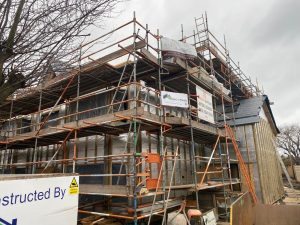
Panels are delivered to site and assembled to create the structural shell.
Typical installation stages include:
- Ground floor slab
- External wall panel installation
- Intermediate floor installation
- Roof panel installation
Buildings often reach weathertight stage rapidly, allowing internal works to begin sooner.
SIP Construction for Multi-Plot Developments
For developers delivering multi-plot housing schemes, SIP construction provides additional efficiencies.
Once a house type has been engineered for SIP construction, it can be replicated across multiple plots.
Benefits include:
- Faster plot progression
- Reduced site congestion
- Predictable construction programmes
Development ROI and Financial Benefits
Although SIP panels may appear more expensive when comparing material costs alone, developers must consider overall project economics.
Benefits include:
- Faster build programmes
- Reduced labour costs
- Reduced material waste
- Earlier property sales
- Lower development finance costs
Shorter construction programmes can significantly reduce interest payments across multi-plot developments.
Technical Performance of Structural Insulated Panels
SIP construction offers strong technical performance across several key metrics.
Thermal Performance
Structural insulated panels can achieve excellent U-values due to continuous insulation.
Typical performance includes:
- Wall U-values around 0.13–0.18 W/m²K
- Strong thermal envelope performance
Airtightness
SIP construction supports excellent airtightness due to prefabricated panels and sealed joints.
Buildings regularly achieve airtightness levels below 3 m³/hr/m².
Structural Strength
When bonded together, SIP panels behave as composite structural elements.
This provides:
- Strong load-bearing capacity
- High racking resistance
- Structural stability for multi-storey housing

Sustainability and Future Housing Standards
Environmental sustainability is increasingly important within residential development.
SIP construction supports sustainable building through:
- Reduced construction waste
- Efficient material use
- High levels of insulation
- Reduced operational energy demand
SIP buildings are well positioned to meet future housing standards.
Frequently Asked Questions About Structural Insulated Panels
What are structural insulated panels?
Structural insulated panels are prefabricated building components consisting of two structural boards bonded to an insulation core.
What are structural insulated panels made of?
SIP panels typically consist of OSB structural boards and an EPS insulation core bonded together.
How are structural insulated panels installed?
Panels are delivered prefabricated and installed on site using cranes or lifting equipment.
How much do structural insulated panels cost?
Costs vary depending on building design, panel thickness and project complexity.
However, developers often benefit from lower overall project costs due to faster build programmes.
Are structural insulated panels energy efficient?
Yes. SIP construction provides continuous insulation, reduced thermal bridging and strong airtightness performance.
Conclusion
As the housing industry evolves, developers are increasingly exploring construction systems that deliver speed, efficiency and energy performance.
Structural insulated panels provide a modern, proven building solution that allows developers to deliver high-quality homes while improving construction efficiency.
By combining off-site manufacturing with rapid on-site assembly, SIP construction enables developers to streamline build programmes and meet the demands of modern housing development.
From bespoke homes to large residential schemes, SIP systems offer a flexible and efficient construction method for the future of housebuilding.
Contact Us